 daylight machines
There are many clocks. Analog, digital, mechanical, and electronic. From large wall clocks to small watches. Each one is different, but most clocks don’t show you what the linear clock tells you in a single glance: where you are in the day. How much time has passed and how much remains. In this article we will dive into what makes the linear clock tick.
The face of the clock is divided into 48 segments. Each one represents 30 minutes — so together they span the full 24 hours of your day, from midnight to midnight.
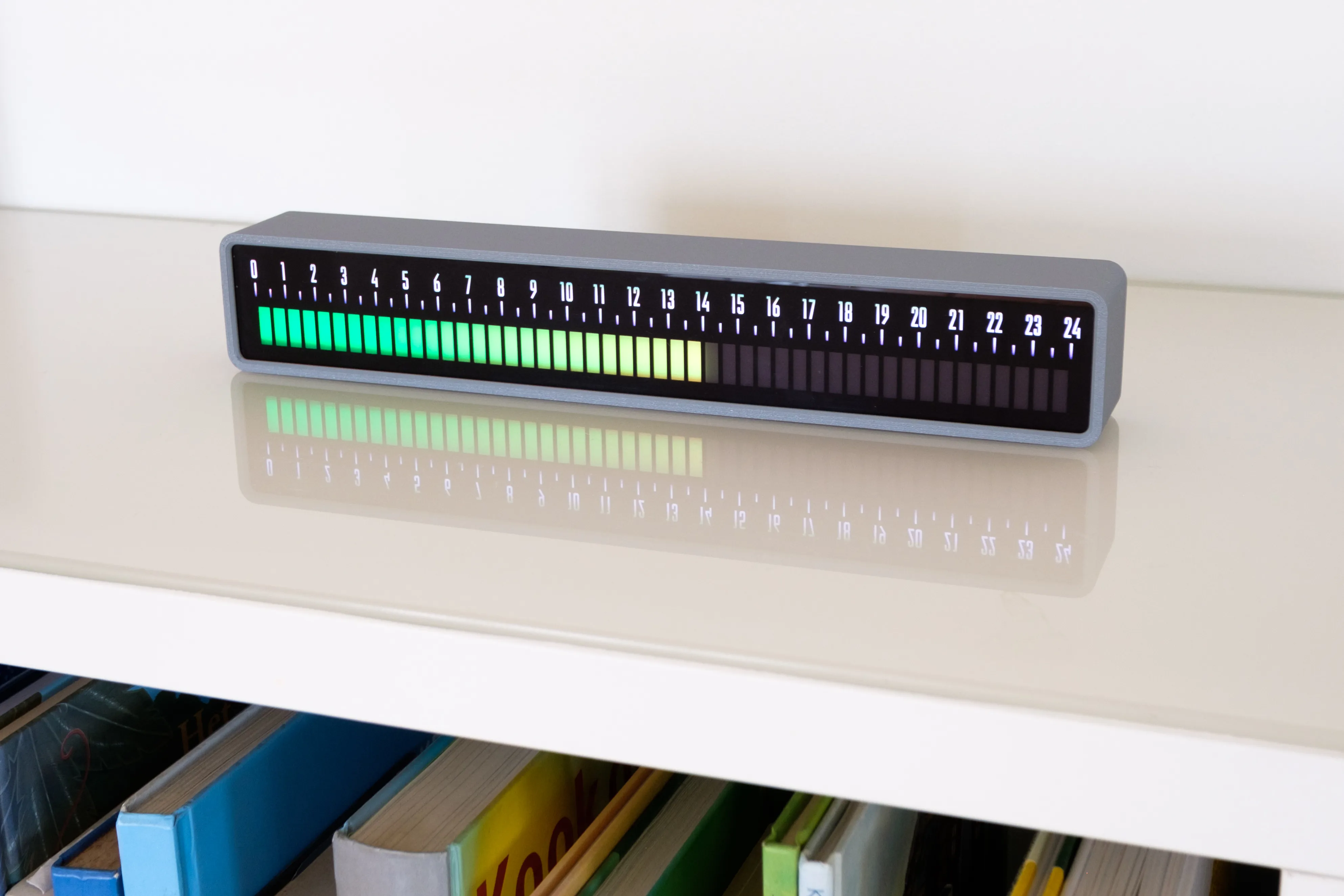
There’s no dial to read, no calculation required. The position of light on the bar is the time.
As time passes, each block gradually lights up from left to right. A block that is completely lit means those 30 minutes have fully elapsed. A block that is partially lit shows the current half-hour in progress — so you can read the time to a few minutes accuracy with a single glance.
I found it surprisingly intuitive to get used to this visualization, and it is easy to discern if a block is lit just a little, roughly half or closer to full. This gives the clock much more power and meaning than you would think from its limited number of blocks.
Once you’re familiar with the layout, reading the clock quickly becomes second nature. You stop reading the clock and start seeing the day.
That’s the experience the linear clock is designed around. The rest — the hardware, the controls, the maker features — exists to enable that experience.
The controls
On the back of the clock you will find three buttons and a USB-C port.
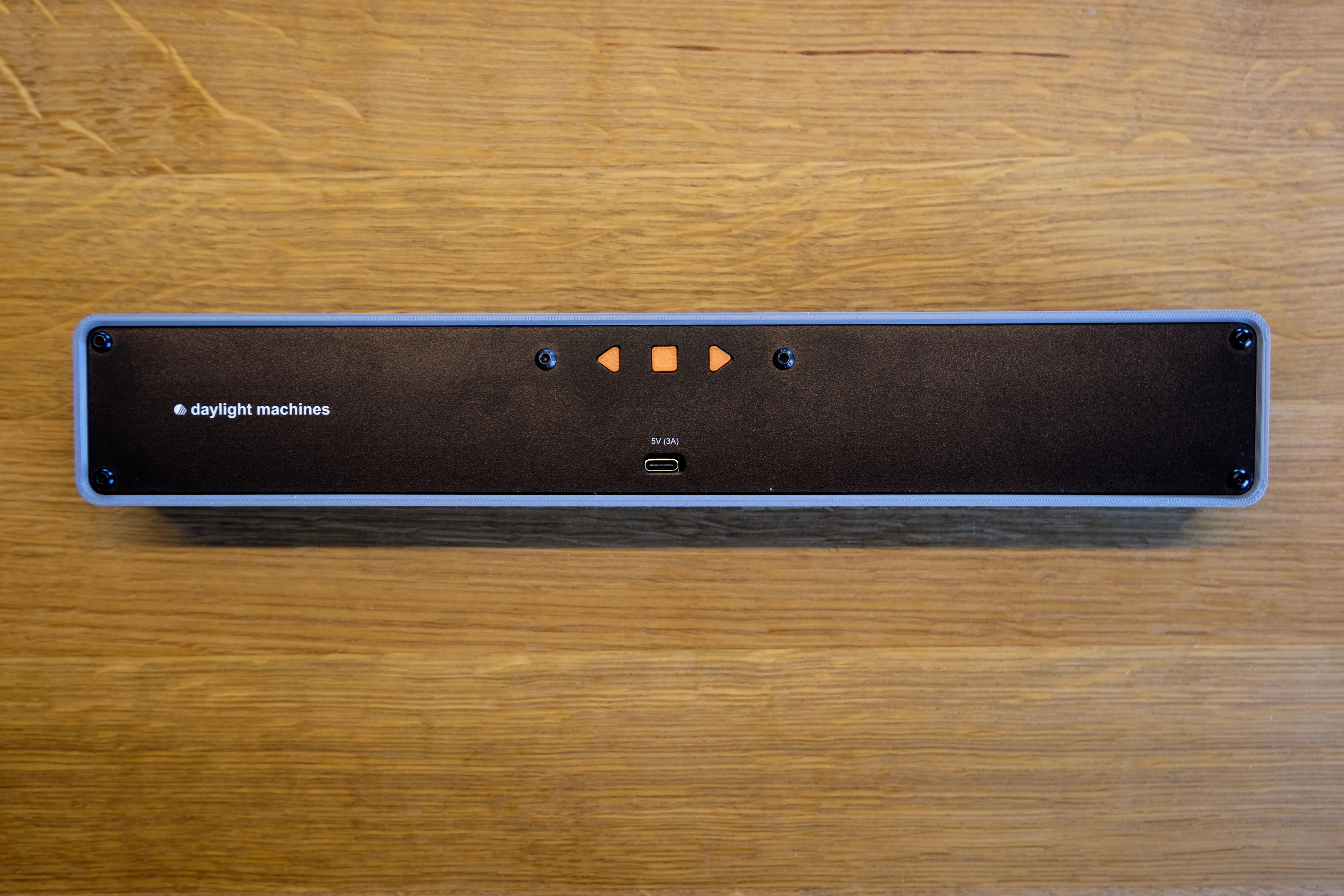
Intuitive controls and easy to connect
With the up, down and mode buttons it is easy to set the time and various other settings off the clock. A long press on the mode button brings you into the menu where you can cycle through various settings, such as setting the actual time, changing the color of the clock, and more.
A short press of the mode button quickly deactivates the display, which can be useful at night if you want to turn off the lights.
Finally you will also find a USB-C port on the back which powers the device using the modern standard that you know from your phone.
The hardware
The clock is made up of several bespoke electronic circuit boards, assembled together with a custom 3D printed internal frame and external enclosure.
A high quality chip is used for the so-called real time clock. This ensures that the clock remains in sync and you don’t often need to set it to the correct time. It will keep tracking perfectly.
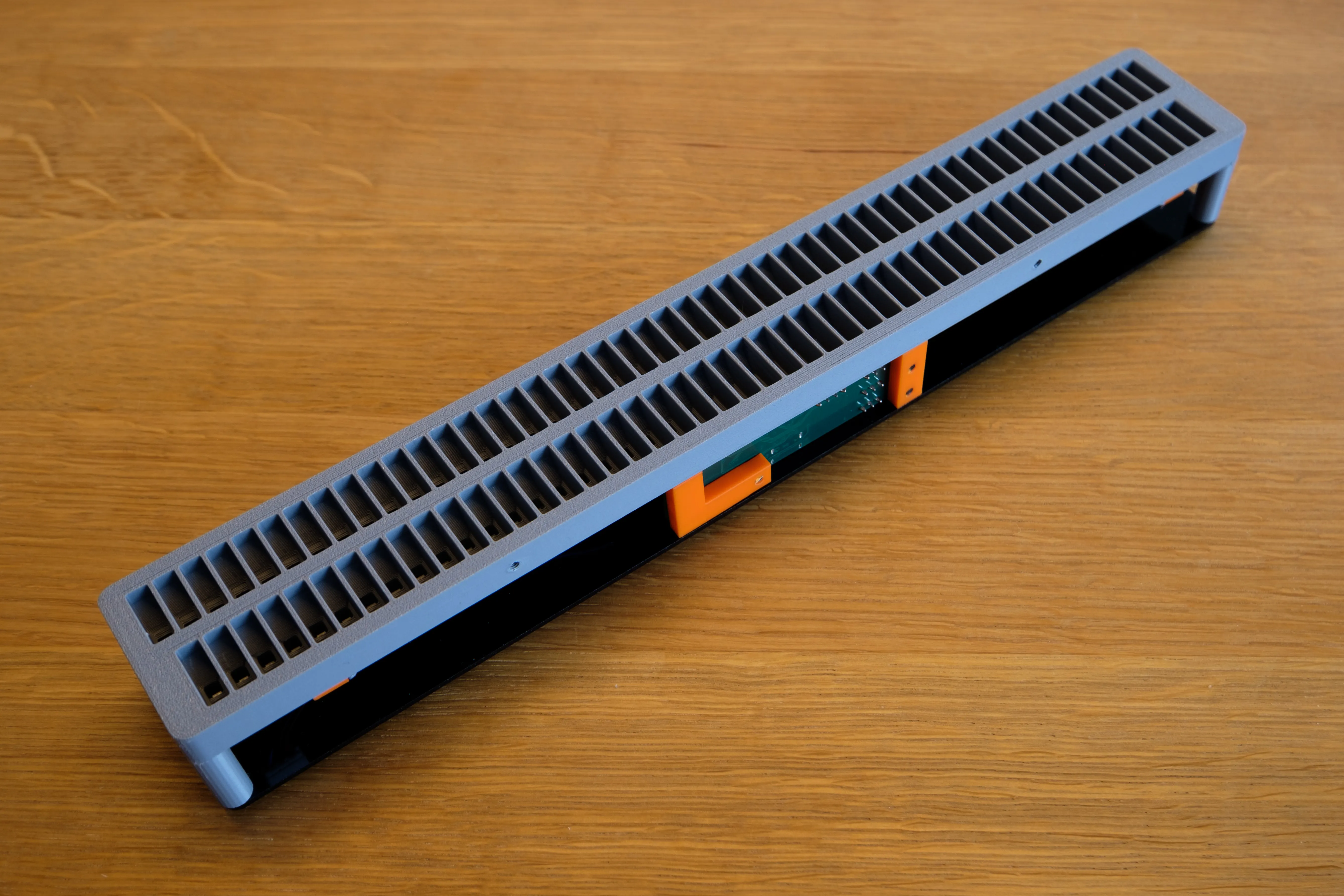
Each LED can be controlled individually
Next to that every block, number and tick is controlled by an individual RGB LED. This means that it can display any color, which allows for many different visualizations of the time.
By default the clock focuses on visualisations that track time with striking clarity. But if you would have any creative ideas on your own, please reach out through the contact page to have a chat about it!
Designed for makers
Another feature is the open design of the hardware. If you know how to write software, or have experience with embedded electronics, it is easy to customize the functions of the clock.
The USB-C port acts as a serial connection to the brains of the clock, so that you can write your own programs or visualisations and use the clock as a creative tool to explore new ideas.
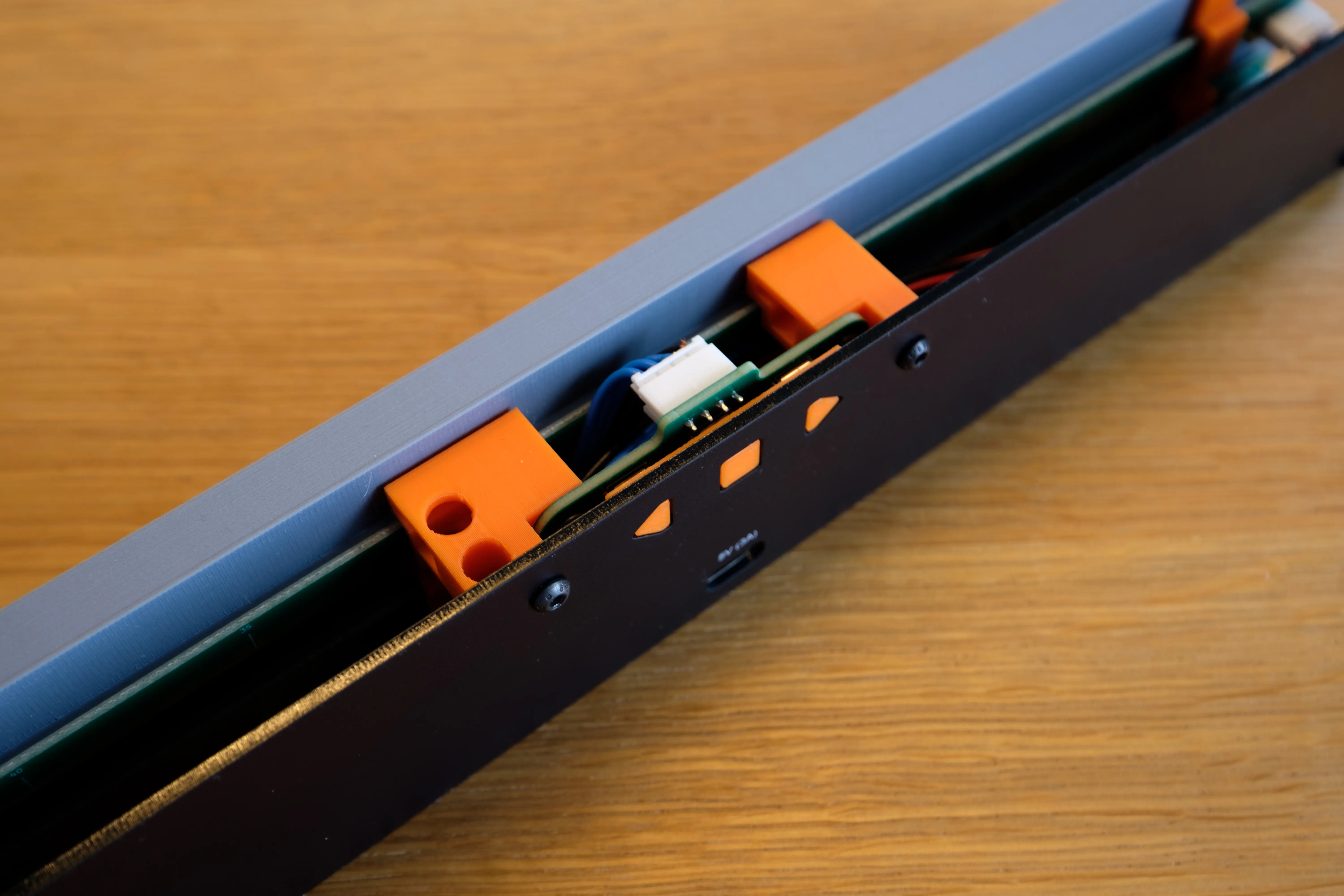
Open hardware for makers
On top of that, there is another hidden feature available to makers. The chip used to control the clock is an ESP32, which if you know, also supports Bluetooth and WiFi. This means you can use the clock to visualise other data than just the time. Think blocks colored in function of the weather report throughout the day, your personal calendar, or a stock ticker that shows gains and losses for your portfolio for each block of 30 minutes.
My goal is to include similar features in the future, but I want to spend the time to get it right. And to make sure that all of it will be easy and intuitive to use, also for the non-tech savvy. Please subscribe to the newsletter at the bottom of this page if you want to receive updates about this.
But whether it’s visualizing more complex data or just tracking time, the basic principle stays the same: presenting information in intuitive ways.
If you’re interested to learn more about this linear clock, you can find more information on the product page.
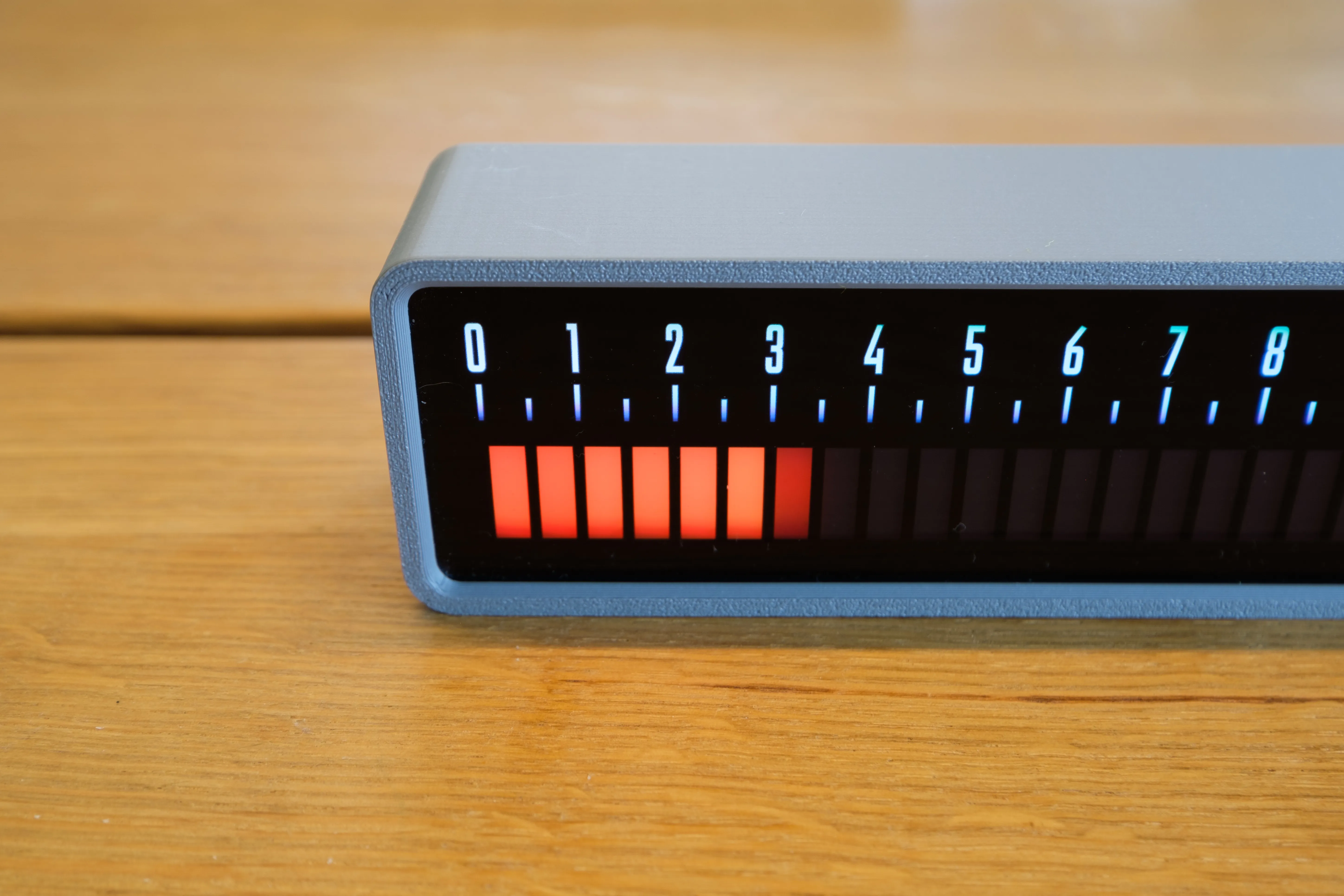
The partially lit block means: it is roughly a quarter past three