 daylight machines
Every product has a story. In this post I want to share how one of my personal side projects inspired the journey behind creating the linear clock, and the journey from initial concept to finished design. It all started with an online contest.
It was the end of 2019, when the blog Hackaday launched a contest called the ‘Tell Time Contest’. With the following brief:
The Tell Time Contest challenged makers to build a unique and amazing time-telling device. Ideally, a clock has a perfect combination of aesthetics and functionality, it is something we want to look at but also to give us important information.
With its combination of engineering and design this was exactly the kind of challenge I wanted to take on.
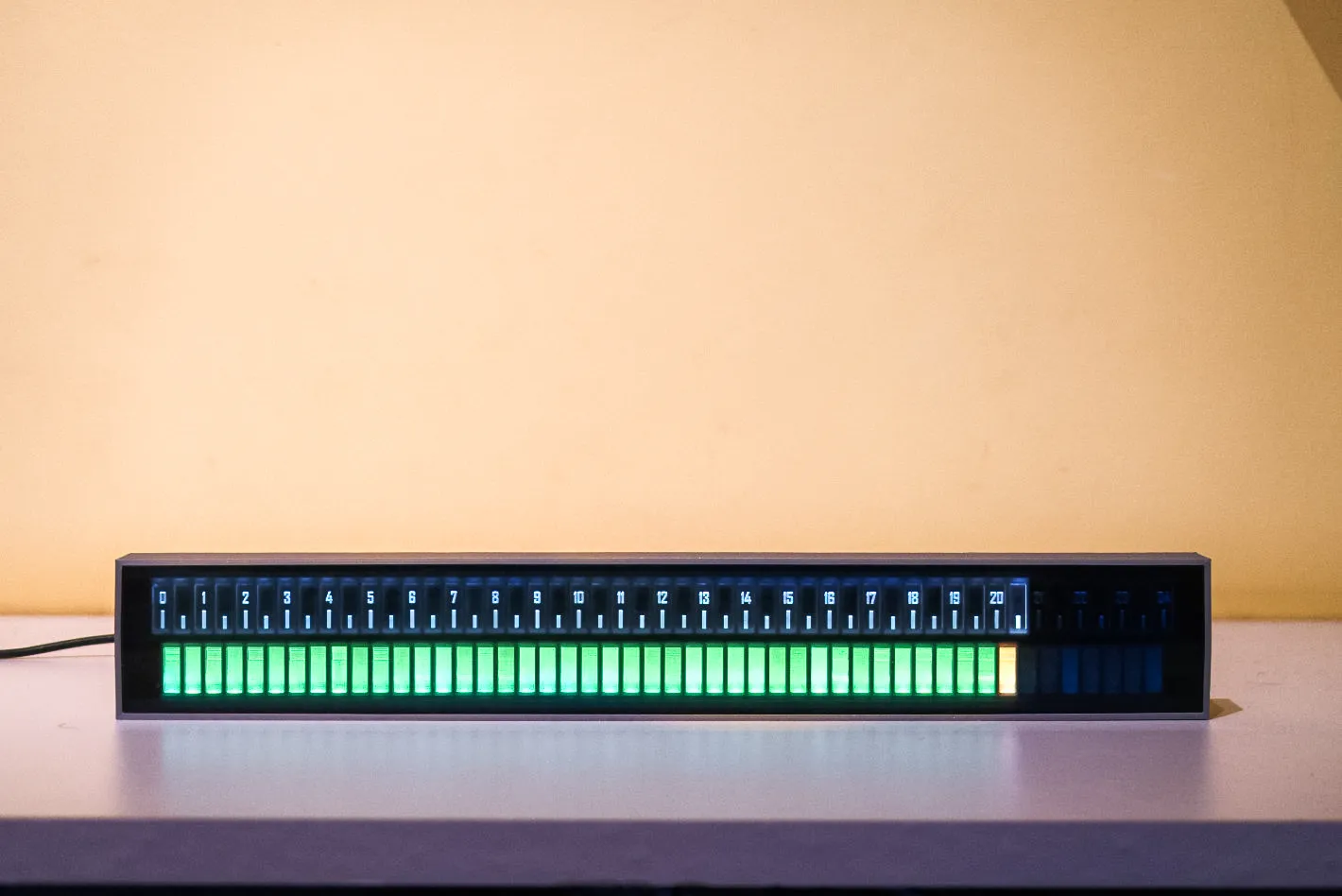
The first concept
So I set out to make a linear clock, just because it seemed fun, and maybe more importantly, it felt intuitive. Now in the digital age we are so used to progress bars and digital calendars, in other words, to see time represented linearly.
I wanted to take that out of the digital world and make it into a calm, ambient and physical object.
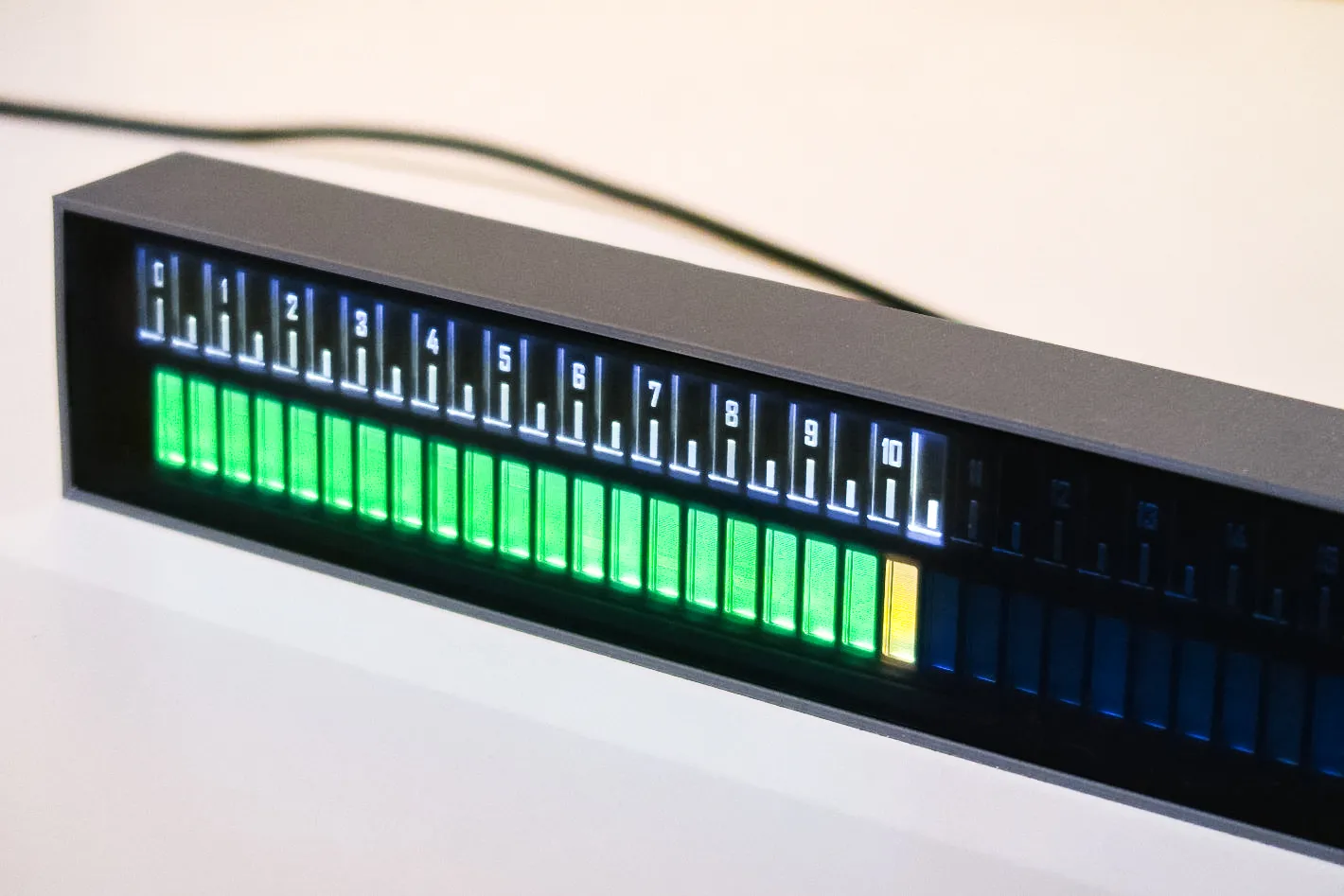
As you can see the basic idea of the design is already the same as what is currently presented here on daylight machines. However, the materials and methods used are quite different. Most noticeably the actual light was reflected from the top and bottom through engraved acrylic. The effect has a retro sci-fi quality to it, but it came with real compromises in legibility.
I really enjoyed building this clock, and even though I didn’t win the contest, it was still nice to be mentioned as one of the runner up candidates.
Redesign
The legibility issues, and the fact that this was very much a prototyped device drove me to make a second version the next year, again a step closer to the final design.
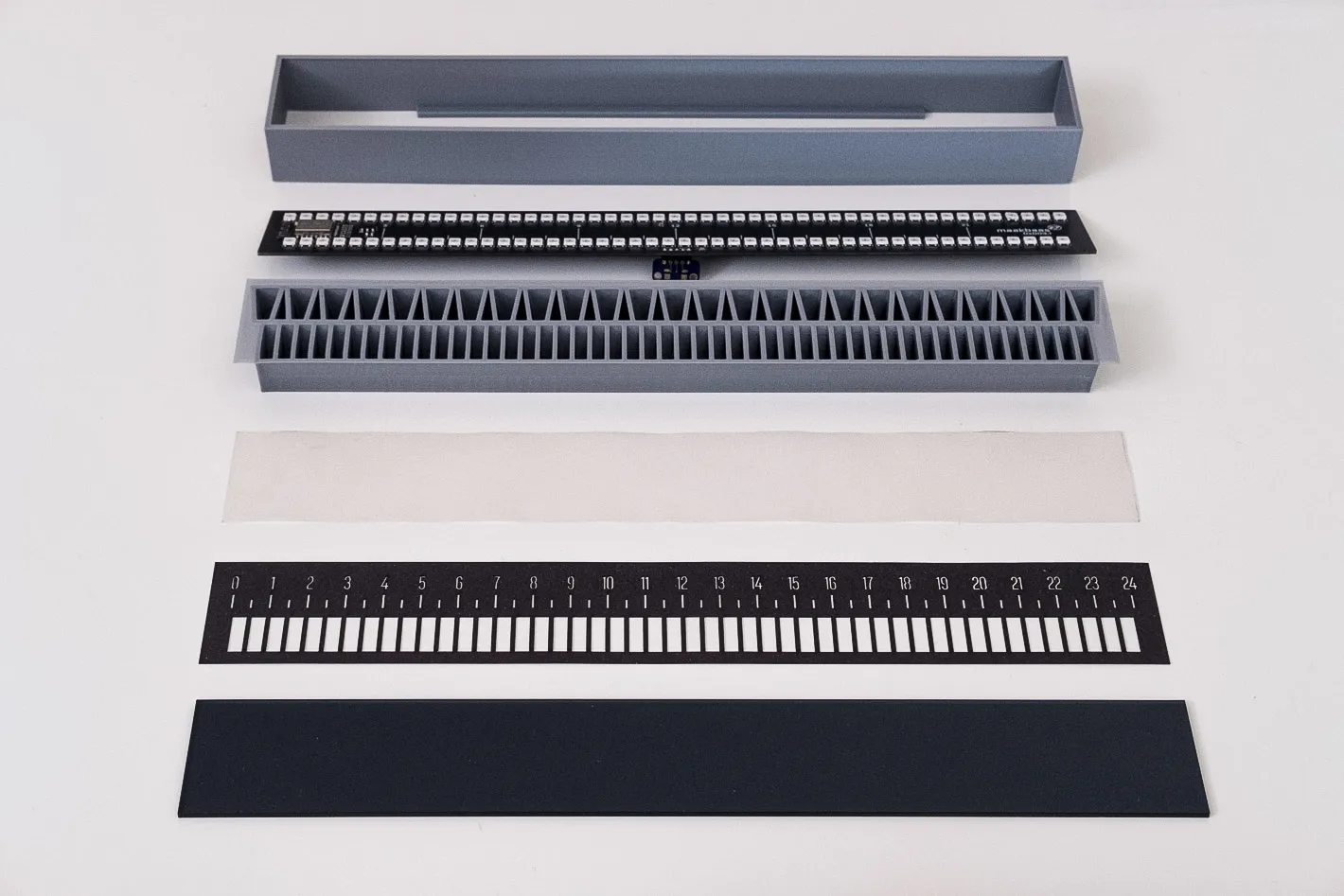
I made my own circuit board, and simplified the construction of the clock while making it easier to read from all angles.
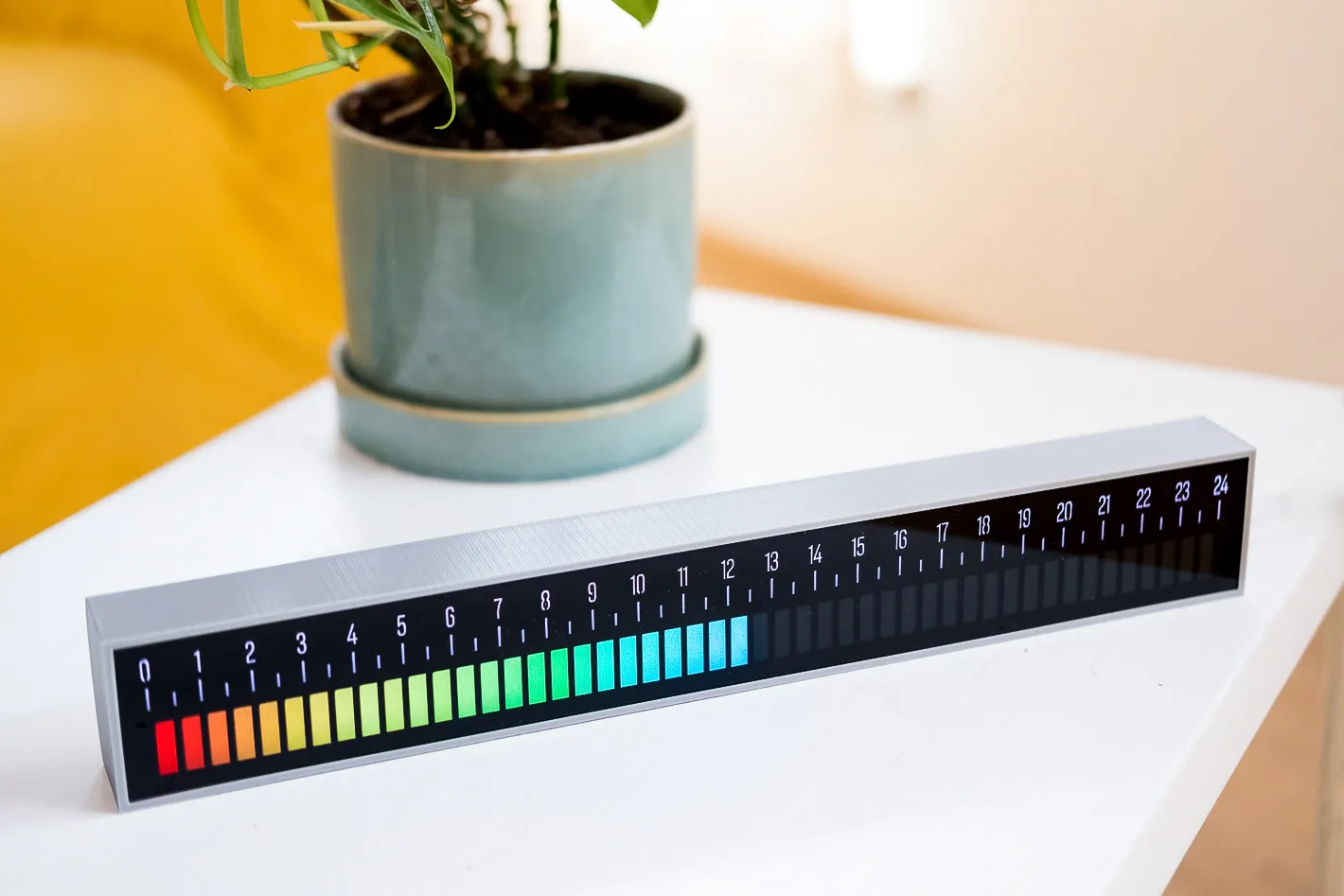
The second concept
In the years since then I received a steady stream of responses to my project blogs on maakbaas.com. First of all, people who just liked the design, thought a linear clock was cool, and were interested in buying one for themselves.
But secondly, there was also a different group of people who reached out. This group included parents with kids struggling to tell time, or neurodivergent people with diagnoses like ADHD, who introduced me to the concept of time blindness, and told me how much a clock like this would help them to better manage their lives.
Daylight Machines
Ultimately this positive feedback, and the meaningful opportunity to provide something of value to people struggling with traditional clocks is what motivated me to start this brand. Daylight machines.
Since then I have redesigned the clock from the ground up — both hardware and software — with the goal of creating a product that is beautiful from every angle, and intuitive and reliable to use. I hope it shows, but I would love to hear what you think.
If you’re interested, you can click here to see more of the final linear clock!
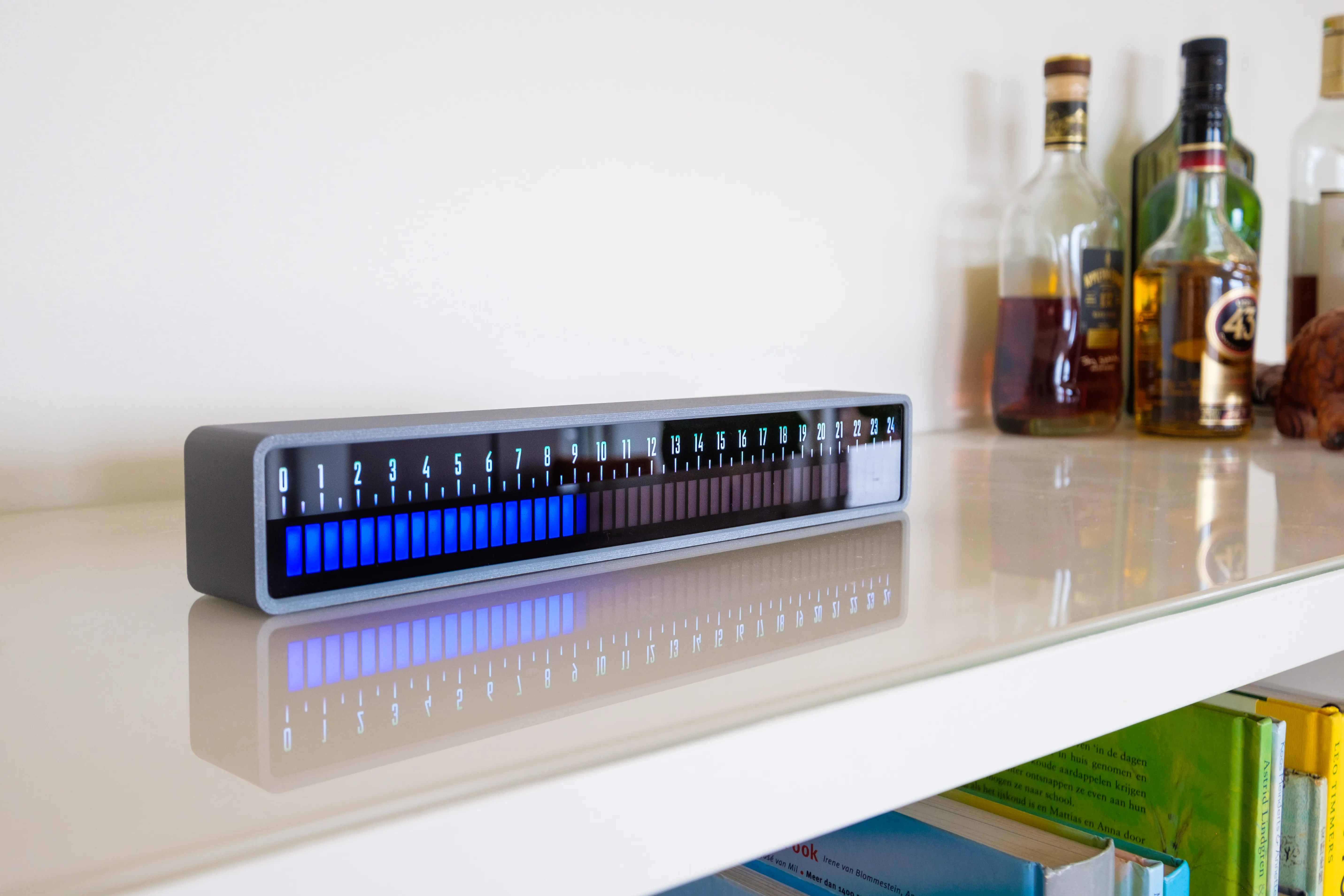
The final design